

Clear vision can create a false sense of security. You may be able to read, drive and use your phone normally while an eye condition is developing silently in the background. That is why people searching for the Best Eye Hospital in Panipat should understand that eye health involves much more than checking whether you can see clearly.
Conditions such as glaucoma and diabetic retinopathy can have few or no noticeable symptoms during their early stages. Other problems, including retinal tears, sudden retinal blood-flow problems and serious eye inflammation, may become urgent quickly. Regular eye examinations can help identify changes before they significantly affect vision.
At Bajaj Eye Centre in Panipat, patients can consult Dr RK Bajaj, MBBS, MS (Ophthalmology), Director and Consultant, for evaluation of a wide range of eye conditions. The centre provides ophthalmic services including cataract, refractive/LASIK procedures, glaucoma, retina, uveitis, dry eye, cornea, paediatric ophthalmology and other areas of eye care.
You should not wait for major vision loss before seeing an eye doctor. New floaters or flashes, a curtain-like shadow, sudden vision loss, severe eye pain, marked redness, light sensitivity or sudden changes in vision require prompt ophthalmic assessment.
Why Normal Vision Does Not Always Mean Healthy Eyes
Your eyesight is only one part of an eye examination.
An ophthalmologist may also assess:
- Eye pressure
- Cornea and other front-of-eye structures
- Lens clarity
- Retina and macula
- Optic nerve
- Blood vessels
- Peripheral vision
- Tear film and ocular surface
- Eye alignment and movement
Some diseases affect structures that are not immediately noticeable to you. For example, early glaucoma can damage the optic nerve without producing obvious symptoms, while diabetic retinal changes may be detected during an examination even when a patient does not notice a change in vision.
This is why preventive eye care in Panipat is important even when your eyesight appears normal.
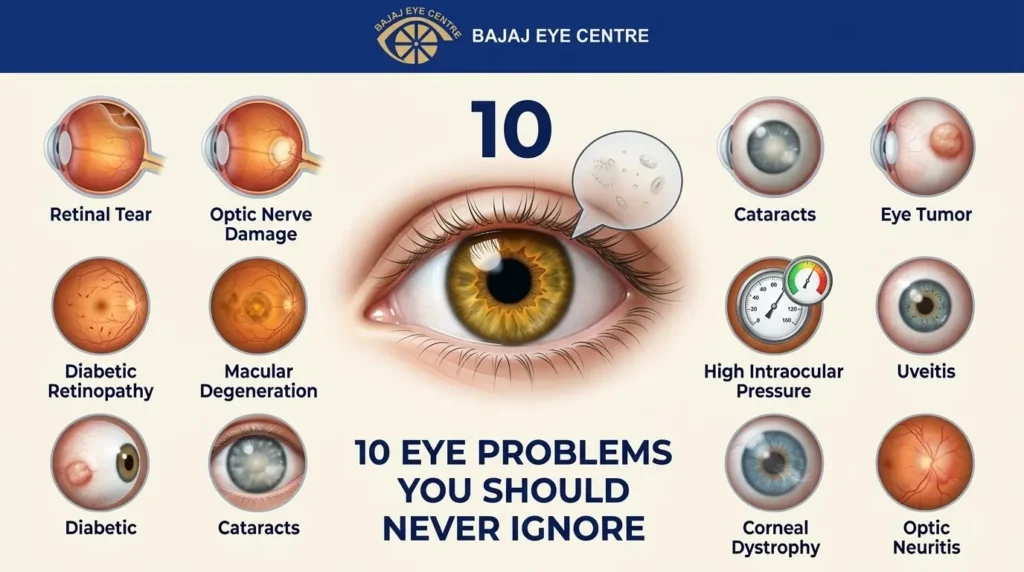
10 Eye Problems You Should Never Ignore
1. Glaucoma
Glaucoma is one of the most important eye conditions to detect early because optic nerve damage can be permanent. Some forms develop gradually without obvious warning signs.
Possible symptoms
Early glaucoma may cause no noticeable symptoms. Later, patients may experience:
- Gradual loss of peripheral vision
- Difficulty adjusting to changes in lighting
- Blurred vision
- Eye discomfort in some forms
- Advanced loss of vision
Sudden severe eye pain, redness, blurred vision, halos around lights, headache or nausea can indicate an acute eye emergency and should not be ignored.
Causes and risk factors
Risk can increase with age, family history, elevated eye pressure and certain other eye or medical factors.
Diagnosis
An eye specialist may assess:
- Intraocular pressure
- Optic nerve appearance
- Visual field
- Angle structures where appropriate
- Retinal and optic nerve imaging when indicated
Treatment
Treatment depends on the type and severity and may involve prescription eye drops, laser treatment or surgery.
The goal is generally to control the disease and prevent further optic nerve damage rather than restore already lost nerve tissue.
2. Diabetic Retinopathy
Diabetes can affect the small blood vessels supplying the retina. Importantly, diabetic retinal disease may develop before a person notices significant vision problems.
Possible symptoms
Early disease may have no symptoms. As it progresses, patients may notice:
- Blurred or fluctuating vision
- New floaters
- Dark spots
- Distorted vision
- Reduced vision
A dilated retinal examination is important for people with diabetes, and additional imaging may be recommended depending on findings.
Treatment
Treatment depends on the stage and may include improved control of diabetes and blood pressure, injections, laser treatment or surgery when clinically indicated.
If you have diabetes, do not wait until your vision becomes blurry before arranging an eye examination.
3. Retinal Tear or Retinal Detachment
A retinal tear or detachment can threaten vision and may require urgent treatment.
Warning symptoms
Watch for:
- Sudden new flashes of light
- A sudden increase in floaters
- Cobweb-like spots
- A dark curtain or shadow
- A new area of missing peripheral vision
- Sudden reduction in vision
These symptoms can occur when the vitreous pulls on the retina or when retinal tissue becomes detached.
What should you do?
Do not wait for symptoms to disappear. New flashes, numerous new floaters or a curtain-like shadow should be evaluated urgently by an eye specialist.
Treatment may involve laser or cryotherapy for selected retinal tears, while retinal detachment may require a surgical procedure depending on its location and severity.
4. Age-Related Macular Degeneration
Age-related macular degeneration, or AMD, affects the macula—the central area of the retina responsible for detailed vision.
Early AMD may not cause obvious symptoms. However, changes can eventually affect reading, recognising faces and other activities requiring central vision.
Possible warning signs
- Straight lines appearing wavy
- Difficulty reading
- A blurred or distorted central area
- Reduced ability to see fine details
- Changes in colour or contrast perception
Diagnosis
An ophthalmologist may examine the retina and use retinal imaging such as optical coherence tomography when appropriate.
Treatment
Management depends on the type and stage. Some patients may require monitoring, lifestyle measures or nutritional advice, while certain forms require specialist treatments such as intraocular injections.
Early assessment can help determine the appropriate management strategy.
5. Cataract
A cataract occurs when the natural lens of the eye becomes cloudy. Cataracts are common with ageing, but they can also be associated with diabetes, steroid exposure, previous eye injury and other factors.
Common symptoms
- Blurred or cloudy vision
- Glare from headlights
- Difficulty seeing at night
- Faded colours
- Frequent changes in glasses prescription
- Reduced contrast
- Halos around lights
Cataracts usually develop gradually, so people sometimes adapt to worsening vision without realising how much their eyesight has changed.
Diagnosis and treatment
An eye examination can determine whether a cataract is responsible for the symptoms and whether another eye problem is also present.
When a cataract significantly interferes with daily activities, cataract surgery may be recommended. The surgeon evaluates the eye and discusses the appropriate intraocular lens option.
6. Corneal Infection or Ulcer
The cornea is the transparent front surface of the eye. An infection or ulcer can potentially damage the cornea and affect vision.
Symptoms can include
- Eye redness
- Pain
- Excessive watering
- Light sensitivity
- Discharge
- Foreign-body sensation
- Blurred vision
- A white or cloudy spot on the cornea
Contact-lens users should be especially cautious about new pain, redness or blurred vision.
Treatment
Treatment depends on the underlying cause. It may require prescription antimicrobial or other medical treatment under ophthalmic supervision.
Do not self-medicate with leftover eye drops, especially steroid-containing drops, because inappropriate treatment can worsen certain eye infections.
7. Uveitis
Uveitis refers to inflammation involving the uveal tissues of the eye. It can have infectious, inflammatory, autoimmune or other causes.
Possible symptoms
- Eye redness
- Pain or aching
- Light sensitivity
- Blurred vision
- Floaters
- Reduced vision
Some forms can become serious if not diagnosed and treated properly.
Diagnosis
The ophthalmologist examines the eye using specialised instruments and may investigate underlying causes depending on the patient’s age, symptoms and clinical findings.
Treatment and recovery
Treatment depends on the cause and location of inflammation. It may include prescription anti-inflammatory medicines or treatment for an underlying infection or systemic condition.
Follow-up is important because inflammation can recur or cause complications.
8. Retinal Vein or Artery Blockage
The retina requires a healthy blood supply to function properly. A blockage in a retinal blood vessel can cause sudden visual symptoms.
Some retinal vascular problems may present with sudden, painless changes in one eye, while certain vascular abnormalities can be detected during an examination before the patient notices major symptoms.
Possible symptoms
- Sudden blurred vision
- Sudden loss of vision
- A missing area in the visual field
- Distorted vision
What should you do?
Sudden vision loss is an emergency. Do not wait for a routine appointment.
An ophthalmologist may examine the retina and assess relevant medical risk factors such as diabetes, blood pressure and vascular health.
9. Optic Nerve Problems
The optic nerve carries visual information from the eye to the brain. Problems affecting the optic nerve can sometimes produce subtle symptoms initially.
Possible warning signs
- Reduced vision in one eye
- Changes in colour perception
- A blind spot
- Pain associated with eye movement in certain conditions
- Unexplained visual field changes
Diagnosis
Depending on the suspected condition, assessment may include visual acuity, colour vision, pupil examination, visual-field testing, retinal/optic nerve imaging and other investigations.
Because optic nerve disorders can have different causes, accurate diagnosis is essential before treatment is selected.
10. Persistent Dry Eye and Ocular Surface Disease
Dry eye is often treated as a minor problem, but persistent symptoms deserve proper assessment—especially when they interfere with reading, computer work, driving or daily activities.
Common symptoms
- Burning or stinging
- Gritty sensation
- Excessive watering
- Fluctuating vision
- Redness
- Light sensitivity
- Eye fatigue
Dry eye can be associated with tear-film problems, environmental exposure, screen use, contact lenses, certain medicines and other ocular or systemic factors.
Treatment
Depending on the cause, treatment may include:
- Lubricating eye drops
- Warm compresses and eyelid care
- Environmental modifications
- Contact-lens adjustments
- Treatment of eyelid or ocular-surface disease
- Other prescription treatments when indicated
Persistent symptoms should be evaluated rather than repeatedly treated with random over-the-counter products.
Eye Symptoms That Need Urgent Medical Attention
Some symptoms should never be ignored, even if you have generally healthy eyes.
Seek urgent ophthalmic assessment for:
- Sudden loss or major reduction of vision
- A curtain or shadow over your vision
- Sudden onset of many floaters
- New flashes of light
- Severe eye pain
- Painful red eye with blurred vision
- Sudden double vision
- New distortion of straight lines
- Significant eye injury or chemical exposure
- Sudden visual changes in one eye
A sudden, painless and severe loss of vision in one eye can be associated with retinal artery occlusion and requires immediate medical evaluation.
Do not drive yourself if your vision is suddenly impaired. Arrange urgent medical assistance.
How Eye Problems Are Diagnosed
A consultation with an eye specialist in Panipat may include several assessments depending on your symptoms and risk factors.
1. Medical and eye history
The doctor may ask about:
- Current symptoms
- Previous eye problems
- Diabetes or high blood pressure
- Family history of eye disease
- Previous eye surgery
- Medicines
- Contact-lens use
- Previous injuries
2. Vision assessment
Visual acuity is measured for near and distance vision.
3. Slit-lamp examination
This allows the ophthalmologist to examine structures such as the cornea, conjunctiva, iris and lens under magnification.
4. Eye pressure measurement
Intraocular pressure may be checked when glaucoma or other conditions are suspected.
5. Retina and optic nerve examination
A dilated examination can help identify retinal, macular and optic nerve abnormalities that may not be visible during a basic vision test.
6. Additional testing
Depending on the clinical situation, the ophthalmologist may recommend visual-field testing, retinal imaging, corneal assessment or other investigations.
How to Protect Your Eye Health
You cannot prevent every eye disease, but several habits can reduce avoidable risks and improve early detection.
Follow these practical steps:
- Schedule comprehensive eye examinations when recommended.
- Keep diabetes and blood pressure under appropriate medical control.
- Never ignore sudden changes in vision.
- Wear appropriate protective eyewear during hazardous work or sports.
- Wear sunglasses that provide suitable UV protection.
- Follow proper contact-lens hygiene.
- Avoid using someone else’s eye drops.
- Do not use steroid eye drops without medical supervision.
- Take regular breaks during prolonged screen work.
- Maintain a balanced diet and healthy lifestyle.
- Tell your eye doctor about family history of glaucoma, retinal disease or other eye conditions.
When Should You Visit an Eye Specialist in Panipat?
You should arrange an eye consultation if you have:
- Persistent blurred vision
- New floaters or flashes
- Recurrent eye redness
- Eye pain
- Frequent headaches associated with visual symptoms
- Difficulty seeing at night
- Glare or halos
- Distorted central vision
- Increasing dependence on brighter light
- Diabetes
- A family history of glaucoma
- Previous eye surgery or injury
- Any unexplained change in your eyesight
Even without symptoms, periodic eye examinations may be appropriate depending on your age, health, family history and existing eye conditions.
For patients searching for Eye care in Panipat, choosing an ophthalmology centre that can assess and manage different eye conditions can make it easier to receive appropriate care when symptoms arise.
Eye Care at Bajaj Eye Centre, Panipat
Bajaj Eye Centre is located at 206, New Bus Stand Road, Sukhdev Nagar, Old Housing Board Colony, Panipat, Haryana 132103.
The centre provides a range of ophthalmic services, including:
- Cataract surgery
- LASIK and refractive surgery
- Glaucoma care
- Retina care
- Uveitis treatment
- Dry-eye care
- Cornea and external eye disease care
- Paediatric ophthalmology
- Squint treatment
- Neuro-ophthalmology
- Oculoplasty
- Age-related macular degeneration care
- Keratoconus care
- Contact lens and vision therapy
These services are listed on the centre’s official website.
Meet Dr RK Bajaj
Dr RK Bajaj, MBBS, MS (Ophthalmology), Director and Consultant at Bajaj Eye Centre, has listed areas of expertise including micro-incision cataract surgery and refractive/LASIK procedures. His profile also notes a Lifetime Achievement Award in Ophthalmology from the Haryana Ophthalmic Society in 2017.
Bajaj Eye Centre states that it was founded in 1988 by Dr R.K. Bajaj and Dr Vandana Bajaj. The centre also provides LASIK and refractive surgery services and has published information regarding eligibility assessment and alternative refractive procedures for patients who are not suitable for LASIK.
For patients in Panipat and surrounding areas, a local eye consultation can help identify whether symptoms are related to a minor condition, a chronic disease or something requiring urgent treatment.
Book an Eye Consultation in Panipat
If you have noticed a new change in your vision—or simply have not had a comprehensive eye examination for some time—do not wait for your eyesight to become severely affected.
Bajaj Eye Centre
Address: 206, New Bus Stand Road, Sukhdev Nagar, Old Housing Board Colony, Panipat, Haryana 132103
Phone: 0180 263 0777
Hours: Monday–Saturday, 9 AM–7 PM; Sunday closed
GMB: https://share.google/Kbv7KOBRUFiRECXTU
Instagram: https://www.instagram.com/bajajeyecentre/
Facebook: https://www.facebook.com/bajajeyecentre123
YouTube: https://www.youtube.com/@BajajEyeCentrePanipat
You can contact Bajaj Eye Centre to ask about consultation availability and the appropriate eye-care service for your symptoms. The centre’s official information lists the same Panipat location, telephone number and opening hours.
Frequently Asked Questions
Clear answers to common questions about eye symptoms, examinations and eye care in Panipat.
Can you have an eye disease even if your vision is normal?
Yes. Some eye diseases, including early glaucoma and diabetic retinal disease, may produce few or no noticeable symptoms initially. A comprehensive eye examination can detect changes that a basic vision check may not reveal.
What are the most serious eye symptoms?
Sudden vision loss, a curtain-like shadow, new flashes, a sudden increase in floaters, severe eye pain, painful redness or sudden major changes in vision require prompt ophthalmic assessment.
When should I see an eye specialist in Panipat?
See an eye specialist if you develop persistent blurred vision, eye pain, redness, flashes, new floaters, distorted vision, night-vision problems or any unexplained change in eyesight. People with diabetes or a family history of eye disease may also need regular eye examinations.
Can glaucoma develop without symptoms?
Yes. Some forms of glaucoma can progress gradually without noticeable symptoms in the early stages. Regular examinations are important because established optic nerve damage may be permanent.
Are new floaters and flashes always dangerous?
Not always, but new or suddenly increasing floaters and flashes should not be ignored. They can occur with changes in the vitreous, but they may also accompany a retinal tear or detachment. Urgent assessment is particularly important if a curtain or shadow appears in your vision.
How often should I get an eye examination?
There is no single schedule that applies to everyone. The appropriate frequency depends on age, diabetes, family history, existing eye disease, medicines and other risk factors. Your ophthalmologist can recommend an examination schedule based on your individual situation.
Can cataracts be treated without surgery?
Cataracts cause clouding of the natural lens. Glasses may improve vision temporarily in some patients, but when the cataract significantly affects daily activities, cataract surgery may be recommended. The decision should be made after an eye examination.
Where can I get eye care in Panipat?
Patients can consult Bajaj Eye Centre, 206 New Bus Stand Road, Sukhdev Nagar, Panipat, for assessment and treatment of a wide range of eye conditions. The centre provides services including cataract, LASIK/refractive surgery, glaucoma, retina, cornea, dry eye, uveitis and paediatric eye care.
Important: Sudden vision loss, a curtain-like shadow, new flashes with a sudden increase in floaters, severe eye pain or other major changes in vision require prompt ophthalmic assessment.