

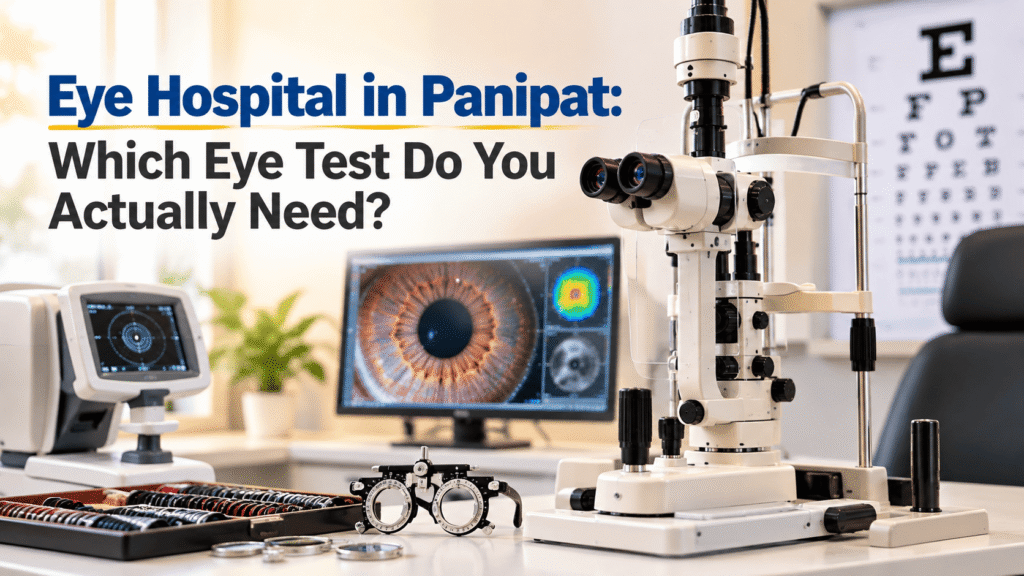
A clear diagnosis comes before a treatment decision
If you are searching for an eye hospital in Panipat, you may already have a question in mind: Why is my vision blurred? Can I reduce my dependence on spectacles? Is an older family member developing cataracts? Or should I be worried about glaucoma even though my eyes do not hurt? These questions can sound similar, but they may require very different examinations and care plans.
An eye examination is more than reading letters from a chart. Depending on symptoms, age, general health and the ophthalmologist’s findings, it may include refraction, eye-pressure measurement, examination of the front of the eye, dilation to inspect the retina or scans that investigate specific concerns. Not every patient requires every test. The aim is to identify what is changing and what decisions the findings actually support.
This guide explains the route from a symptom to an informed consultation, including when glasses are enough, when LASIK assessment may be reasonable, when cataract is considered and why glaucoma needs particular attention. It also helps patients prepare useful questions before visiting an eye doctor in Panipat.
Start with the symptom, not the name of a procedure
The first step is to describe the change accurately. Blurred vision is a symptom, not a diagnosis. It may result from a refractive error that improves with glasses, dryness affecting the tear film, a cloudy natural lens, problems affecting the retina or other conditions. An eye doctor uses the history and examination to narrow down the possible causes.
Blurred vision at a distance or while reading
If road signs appear unclear but nearby objects remain sharp, myopia may be involved. Difficulty with reading or close work can have several explanations, including age-related changes in focusing. Astigmatism may make objects look distorted at different distances. A refraction test helps determine whether prescription lenses improve clarity, but the doctor may still examine the eye for other causes when symptoms or findings warrant it.
Glare, halos or faded colours
People sometimes describe night-driving glare, headlight halos or colours appearing less vivid. Cataract can produce these changes, especially when the natural lens becomes cloudy. Yet glare is not proof of cataract: tear-film disturbance and other optical problems can contribute. An examination can distinguish likely causes and show whether a new spectacle prescription, ocular-surface care or cataract discussion is appropriate.
An eye that looks fine but has a hidden problem
A person can have useful central vision and still have an eye condition that needs monitoring. Open-angle glaucoma often develops without early warning symptoms, and diabetes-related retinal changes may also be present before vision noticeably deteriorates. This is why a risk-based dilated eye assessment may matter even when a person can read normally.
Pain, sudden vision loss or new flashes are different
Sudden loss of vision, a curtain-like shadow, a sudden shower of new floaters, flashes of light, significant eye pain, or a red painful eye with nausea should not be treated as an ordinary appointment query. Seek urgent ophthalmic assessment or emergency care promptly. Sudden symptoms may need time-sensitive evaluation, and delaying until a routine check-up could be unsafe.
What happens during a comprehensive eye examination?
A consultation typically begins with questions about the timing of symptoms, whether one or both eyes are affected, previous eye treatments, spectacles or contact lenses, medicines and relevant medical conditions. The ophthalmologist then selects examinations according to the clinical picture. Some commonly used assessments are described below.
1. Visual acuity and refraction
Visual acuity measures how clearly you can see at a specified distance. Refraction estimates the lens power needed to focus light on the retina. These tests can identify myopia, hyperopia, astigmatism and age-related near-vision needs. A normal or improved chart reading does not exclude every eye disease, so the wider examination still matters.
2. Slit-lamp examination
A slit lamp is a microscope with a controlled beam of light. It enables the eye doctor to examine structures such as the cornea, tear film, anterior chamber and lens. This can help evaluate dryness, inflammation, corneal changes or lens clouding. The same symptom, such as glare, may have different explanations depending on what the examination shows.
3. Eye-pressure measurement and optic-nerve assessment
Tonometry estimates intraocular pressure. It is important for glaucoma assessment, but a single pressure reading is not enough to diagnose or rule out glaucoma. The appearance of the optic nerve, corneal thickness, visual-field testing, optical coherence tomography (OCT), drainage-angle assessment and trends over time may also be relevant. The exact combination of tests is a clinical decision.
4. Dilated retinal examination
Drops may be used to enlarge the pupil so that the ophthalmologist can view the retina, macula and optic nerve more thoroughly. This is relevant when there is concern about retinal disease, diabetes-related changes, flashes or floaters, or unexplained reduction in vision. Dilation can temporarily blur near vision and increase light sensitivity, so ask whether you should arrange transport after the visit.
5. Condition-specific scans and measurements
Corneal topography or tomography helps assess corneal shape when refractive surgery or corneal disease is being considered. Biometry measures the eye for intraocular lens planning before cataract surgery. OCT can provide cross-sectional images of retinal or optic-nerve structures when indicated. A scan is useful only in relation to a clinical question; more tests do not automatically mean better care.
Considering glasses removal in Panipat? Begin with eligibility
The search phrase “hospital for glasses removal in Panipat” often reflects a simple wish: to manage work, travel, sport or daily life with less dependence on spectacles. But “glasses removal” is a broad everyday expression, not a promise that every prescription can be corrected surgically or that glasses will never be needed again.
LASIK is one form of refractive surgery. It reshapes the cornea to change how light focuses within the eye. For suitable adults with stable prescriptions, healthy corneas and appropriate ocular health, it may reduce reliance on glasses or contact lenses. However, it is not the same as cataract surgery, and it is not suitable for every patient. The risk-benefit discussion must be individual.
What does an assessment for LASIK involve?
A doctor for LASIK in Panipat should assess more than spectacle power. Important factors may include prescription stability, corneal shape and thickness, tear-film health, pupil measurements where relevant, other eye conditions, medicines and realistic expectations. Some people need contact lenses to be stopped for a specified period before measurements; the clinic should advise on timing for their lens type.
Dry eyes, thin or irregular corneas, certain eye diseases, an unstable prescription or other medical factors can change candidacy. Pregnancy or breastfeeding can also be relevant to timing. In some cases the safest decision is to avoid laser surgery or consider alternatives after a specialist assessment. Refractive surgery carries potential complications, including dryness, visual disturbances and under- or overcorrection.
LASIK and reading glasses are separate conversations
People in their forties may notice that a phone screen is harder to focus on at close range. This commonly reflects presbyopia, an age-related reduction in near focusing. LASIK for a distance prescription does not stop the natural aging process of the eye, so reading glasses may still be required. Patients should discuss both distance and near-vision goals rather than making a decision around a single advertised procedure.
For an overview of the centre’s refractive services, see the verified service page below.
Refractive surgery and LASIK: https://bajajeyecentre.org/refractive-surgery-and-lasik/
When is a cataract examination more useful than new glasses?
A cataract is a clouding of the eye’s natural lens. It commonly develops with age, although other factors can contribute. A person may experience progressively blurred or hazy vision, difficulties with glare, more frequent changes in prescription or trouble with daily tasks such as reading and driving. Cataract usually progresses gradually, and its effect on life may be more important than how it looks in isolation.
Early cataract symptoms may sometimes be managed with improved lighting or a revised spectacle prescription. When the lens clouding significantly interferes with daily activities, an ophthalmologist may discuss cataract surgery. The procedure removes the cloudy lens and replaces it with an artificial intraocular lens (IOL). The decision is based on visual needs, examination findings, other eye conditions and an informed discussion about benefits and risks.
Questions to ask about cataract surgery in Panipat
Ask what is responsible for the vision change, whether cataract is the main limiting factor, what the realistic postoperative vision may be and whether other problems could affect the result. Lens selection also deserves attention. Different IOL designs address different visual goals and can involve trade-offs, including glare or the continued need for glasses. A discussion about driving, screen use, reading and general eye health helps put lens choices in context.
If diabetes, glaucoma, retinal disease or corneal problems are present, ask how they influence the surgical plan and follow-up. No cataract operation should be described as risk-free, and not every patient can expect to be spectacle-free afterwards.
Cataract surgery service information: https://bajajeyecentre.org/cataract-surgery/
Why glaucoma requires a different kind of attention
Glaucoma describes a group of diseases in which the optic nerve becomes damaged, often in association with intraocular pressure. Damage from glaucoma is generally irreversible. Treatment aims to preserve remaining vision by lowering pressure or addressing other relevant factors; it does not simply restore nerve tissue that has already been lost.
Open-angle glaucoma may progress gradually without pain or obvious early vision changes. Family history, increasing age and certain eye or medical characteristics can influence risk. People who have risk factors may require regular follow-up intervals recommended by their ophthalmologist. Evaluation can include repeat pressure readings, optic-nerve imaging and visual-field tests to monitor change.
Is high eye pressure always glaucoma?
No. Some people have elevated pressure without demonstrable glaucomatous nerve damage, while others develop glaucoma despite pressures within a population’s typical range. The doctor interprets pressure together with the optic nerve, visual fields, corneal characteristics and other findings. A single number cannot replace an assessment.
Can glaucoma be treated with drops alone?
Pressure-lowering eye drops are commonly used, but the plan depends on the type and severity of glaucoma, target pressure, response to treatment, adherence and other factors. Laser procedures or surgery may be considered in appropriate circumstances. Missing follow-up or stopping prescribed drops without advice can undermine pressure control. An unusually painful red eye with headache, halos or nausea needs emergency assessment because acute angle closure is potentially sight-threatening.
Glaucoma information at Bajaj Eye Centre: https://bajajeyecentre.org/best-glaucoma-hospital-in-panipat/
When does dryness explain blurred or fluctuating vision?
A person whose vision varies after long screen sessions may assume that spectacle power has changed. In some cases the tear film is unstable, which can produce burning, grittiness, watering, intermittent blur or light sensitivity. Dry-eye assessment looks at symptoms, ocular surface findings, eyelids and possible contributing factors. Treatment varies and may include adjustments to habits, lubricating drops or other clinician-directed care.
This distinction matters particularly before LASIK measurements. The cornea needs a stable surface for reliable assessment, and existing dry-eye symptoms may affect procedure suitability. Patients should mention contact lens discomfort, frequent eye rubbing, previous inflammation and ongoing use of eye drops.
Dry-eye service information: https://bajajeyecentre.org/dry-eyes/
Choosing the right appointment: practical situations
For a student with frequent headaches
Headaches can have many causes. If they occur during close work, refraction and binocular-vision assessment may be relevant, but headaches alone should not be assumed to indicate weak eyesight. Persistent, severe or unusual headaches merit medical evaluation, particularly if accompanied by other concerning symptoms.
For an office worker who wants LASIK
The next step is a candidacy consultation, not immediately booking a procedure. Bring the latest prescription, tell the doctor whether it has changed, and disclose dryness, allergies, medicines and contact-lens wear. Ask how the chosen treatment addresses the actual prescription and what visual outcomes are realistic.
For a parent concerned about a child’s eyesight
A child who sits very close to screens, squints or struggles to see the board may need a paediatric eye examination. It can assess refraction and other causes of visual difficulty. Children should not be treated as routine LASIK candidates; the approach differs from elective adult refractive surgery.
For an older adult who has stopped night driving
Night glare may reflect cataract but can also have other explanations. A lens examination, updated vision test and assessment for coexisting eye conditions help determine whether surgery is warranted or whether another measure is appropriate.
For someone with diabetes
Do not wait for blurred vision to ask about a dilated retinal examination. Diabetes can affect retinal blood vessels before symptoms develop. Examination frequency depends on the type and duration of diabetes, findings, pregnancy status where relevant and clinician guidance. Good systemic disease management supports long-term eye health.
How to make the most of an eye doctor consultation in Panipat
Write down when symptoms began, whether they are constant or intermittent, the activities affected and any past treatment. Bring existing spectacles and prescriptions, a list of medicines and known conditions, including diabetes, blood-pressure problems or previous eye surgery. Mention a family history of glaucoma or retinal disease if relevant.
Before leaving, ask the doctor to explain the working diagnosis in plain language, why each recommended test or treatment is necessary, what alternatives exist, which side effects matter and when follow-up is required. If dilation or a procedure is planned, ask whether driving home is appropriate. An informed appointment should give you a clear next step, even when no surgery is advised.
Eye care available at Bajaj Eye Centre, Panipat
Bajaj Eye Centre’s official website lists cataract surgery, refractive surgery/LASIK, glaucoma care and additional eye-care services including retinal evaluation, paediatric ophthalmology, squint care, uveitis and dry-eye services. The website identifies Dr R. K. Bajaj (MBBS, MS Ophthalmology) and Dr Aastha Bajaj Marwah (MBBS, MS, PDCR), among its clinicians. Availability of a particular consultation, test or procedure should be confirmed directly when booking.
For patients comparing an eye hospital in Panipat or looking for an eye doctor in Panipat, the useful first question is not which procedure to choose, but what examination is needed to understand the problem. A clinical assessment can clarify whether the concern is a spectacle prescription, an ocular-surface condition, cataract, glaucoma or another diagnosis.
Eye care services at Bajaj Eye Centre: https://bajajeyecentre.org/eye-care-services/
Frequently asked questions
1. When should I visit an eye hospital in Panipat for blurred vision?
Book an eye examination for new, persistent or worsening blur. Sudden loss of vision, marked pain, flashes with new floaters or a curtain across vision requires urgent assessment.
2. Does an eye test always require dilating drops?
No. Dilation depends on symptoms, risk factors and the examination needed. It is often useful for a fuller retinal and optic-nerve assessment.
3. Can I have LASIK if my glasses prescription changed recently?
A changing prescription may mean you are not an appropriate candidate yet. A refractive surgeon should review stability and other eye-health factors.
4. Is LASIK the same as cataract surgery?
No. LASIK reshapes the cornea to correct selected refractive errors; cataract surgery replaces a cloudy natural lens with an intraocular lens.
5. Can cataract cause problems with night driving?
Yes. Cataract can increase glare and reduce contrast, although dryness and other conditions can cause similar complaints. An exam identifies the likely cause.
6. Can glaucoma exist without eye pain?
Yes. Common open-angle glaucoma often produces no early pain or noticeable symptoms. Risk-based testing and follow-up are important.
7. Does normal eye pressure rule out glaucoma?
No. Some people develop glaucoma despite pressure readings in the usual range. Optic-nerve assessment and other tests may be needed.
8. Will LASIK mean I never need glasses again?
Not necessarily. Vision can change over time, presbyopia can cause near-vision needs and some patients continue to need spectacles for certain tasks.
9. Should people with diabetes have eye checks even if vision is clear?
Yes. Diabetic retinal disease can develop before symptoms are obvious. Ask your treating clinicians how frequently dilated retinal checks are needed.
10. How can I arrange an eye consultation at Bajaj Eye Centre?
Contact the centre using the published phone numbers or website. Confirm appointment timing, the appropriate specialist and whether you may need dilation or other investigations.
Book an eye consultation in Panipat
Bajaj Eye Centre | 206 New Sukhdev Nagar, Panipat, Haryana, India. Phone: 0180-2630777 or +91-82959-12777. The official website lists Monday–Saturday, 9:00 a.m. to 7:00 p.m., and Sunday closed; please confirm current timings before travelling.
Contact and appointment information: https://bajajeyecentre.org/contact/
This article is general educational information. It does not replace an individual examination, diagnosis or treatment advice from a qualified ophthalmologist.
Conclusion: make the eye examination the starting point
Whether your search is for cataract surgery in Panipat, a glaucoma hospital in Panipat, LASIK evaluation or an eye doctor for everyday vision complaints, the sound starting point is a diagnosis. Different eye problems can produce overlapping symptoms, and treatments that help one condition may be irrelevant to another. With the right questions and an appropriate clinical examination, patients can make decisions based on their own eye health rather than an assumed procedure.