

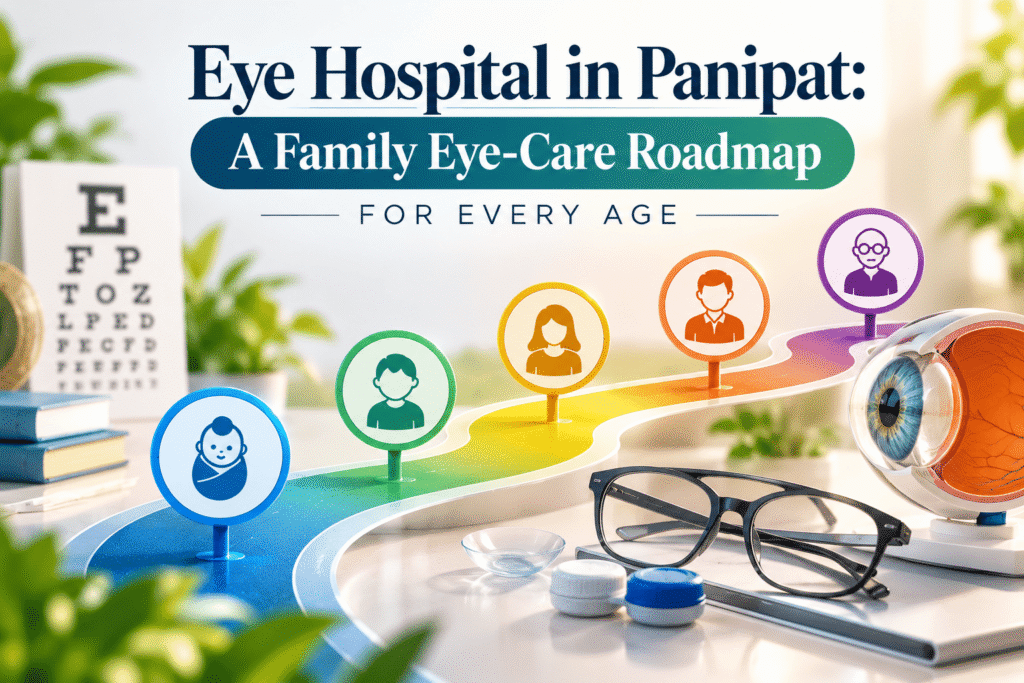
The eye-care needs of a schoolchild, a working adult and an older parent are rarely the same. One person may need an accurate spectacle prescription, another may want to understand whether LASIK is suitable, and someone else may require monitoring for cataract, glaucoma or retinal disease. A useful way to approach family eye health is to plan care around age, risk factors and symptoms, rather than waiting for vision to become noticeably poor.
For families considering an eye hospital in Panipat, this guide explains which conversations and examinations matter at different life stages, when eye symptoms need urgent attention, and how to prepare for an ophthalmology appointment. It is not a hospital ranking or a list of promotional claims. It is a practical resource to help people make safer, better-informed choices about their vision.
Why a family eye-care plan is more useful than one fixed checkup schedule
There is no single interval that suits every person. The frequency of a comprehensive eye examination depends on age, current symptoms, spectacle or contact-lens use, personal and family medical history, and findings from earlier examinations. People with diabetes, known eye disease, previous eye surgery or a family history of glaucoma may need monitoring more often than otherwise healthy adults.
An eye examination can look beyond the ability to read the smallest letters on a chart. Depending on clinical need, an ophthalmologist may check the front of the eye, the lens, the optic nerve and the retina. This is important because a person may read fairly well while an early condition is developing. Equally, blurry vision does not automatically mean that surgery is needed.
The American Academy of Ophthalmology’s 2026 guidance provides broad examination intervals for low-risk adults without symptoms. These are starting points, not substitutes for an individual doctor’s advice. Any new symptom calls for assessment regardless of when the next routine checkup is due.
Childhood: support normal visual development and learning
Young children do not always know when vision is unclear
A child who has always seen the classroom board poorly may not realise that anything is wrong. Instead of saying “I cannot see,” they might move closer to books or screens, close one eye, tilt their head or lose interest in visually demanding tasks. Parents and teachers may notice an eye turning inward or outward, repeated squinting, or difficulty maintaining attention during reading.
Some childhood conditions, including amblyopia (often called lazy eye) and certain forms of squint, benefit from timely identification because visual development is age-sensitive. An examination may assess visual acuity, eye alignment, focusing, refractive error and the health of the eye itself. The exact tests vary with a child’s age and ability to cooperate.
What parents can prepare before a child’s visit
Bring previous prescriptions, details of any premature birth or known developmental concerns when relevant, and observations from teachers. Note whether symptoms occur at distance, near, with one eye closed, or at particular times of day. A family history of high spectacle power, squint or childhood eye disease may also be useful.
Bajaj Eye Centre lists paediatric ophthalmology and squint services on its website. Families can read the paediatric service information here: https://bajajeyecentre.org/paediatric-ophthalmology/ . An ophthalmologist can advise whether a child needs glasses, further testing, treatment or monitoring.
Teenagers and young adults: distinguish a prescription change from eye disease
Myopia and other refractive errors can affect studying, driving and sports. A growing spectacle number, frequent headaches during visual work or blurred distance vision deserves an eye examination. However, headaches are not always caused by the eyes, and a new prescription should not be assumed to explain every complaint.
For contact-lens wearers, hygiene and follow-up are essential. Sleeping in lenses not prescribed for overnight use, exposing lenses to water, or reusing solution incorrectly can increase infection risks. Persistent pain, redness, light sensitivity or reduced vision while wearing lenses warrants prompt assessment and discontinuing lens use until medically reviewed.
Is spectacle-removal surgery relevant at this age?
A person searching for a LASIK hospital in Panipat might be eager to stop wearing glasses, but an eligibility assessment matters more than the name of a technology. Surgeons consider age, prescription stability, corneal thickness and shape, tear-film health, general eye health and the patient’s expectations. Being 18 or older alone does not establish suitability; some individuals should postpone refractive surgery or consider other options.
The hospital’s dedicated refractive surgery page covers LASIK-related assessment and approaches. Read: https://bajajeyecentre.org/refractive-surgery-and-lasik/ . No refractive procedure guarantees complete freedom from glasses for every task or prevents future age-related reading-glasses needs.
Working adults: protect comfortable vision without dismissing symptoms
Many adults spend long hours on laptops, mobile devices or detailed near work. They may notice burning, gritty eyes, watering, intermittent blur or difficulty refocusing after prolonged screen use. These symptoms may reflect dry eye, reduced blinking, an uncorrected prescription or another condition. Screen breaks and better workstation habits may help comfort, but persistent symptoms should be assessed rather than treated indefinitely with random eye drops.
Useful habits include blinking fully, adjusting screen position and glare, taking regular pauses from near work, and following prescribed treatment where needed. Avoid starting steroid-containing eye drops or redness-relief medicines without professional advice. A comprehensive review can distinguish a tear-film problem from corneal, lens or retinal causes of vision change.
An important distinction: a routine glasses check is not always a complete medical eye examination
A refraction tells you which lenses improve sharpness. A medical eye examination investigates whether the eye structures are healthy. Some patients need both. If vision remains blurred despite a new spectacle prescription, the ophthalmologist may investigate cataract, corneal irregularity, retinal disease or other causes. This distinction can prevent repeated spectacle changes that do not address the underlying problem.
From the forties onward: prepare for near-vision changes and other risks
Finding it harder to read small text at arm’s length often reflects presbyopia, a common age-related change in focusing. It does not necessarily mean that the eye is diseased. Reading glasses, progressive lenses and other optical approaches may help, depending on distance-vision needs and lifestyle.
Even when near-vision difficulty feels routine, middle age is an appropriate time to establish a baseline of eye health if this has not already been done. Conditions such as glaucoma can develop without noticeable early symptoms. Eye pressure is one piece of a glaucoma assessment, but pressure alone does not confirm or exclude the condition. Optic nerve assessment, visual-field testing and other investigations may be considered when clinically indicated.
Glaucoma is generally about preserving vision, not reversing past damage
Glaucoma can damage the optic nerve and lead to irreversible sight loss. Management may involve medications, lasers or surgery depending on diagnosis and disease stage. The goal is to reduce the risk of further damage through appropriate treatment and follow-up. A relative with glaucoma, certain eye conditions or other risk factors should be discussed with the doctor.
Bajaj Eye Centre has a glaucoma information page at https://bajajeyecentre.org/best-glaucoma-hospital-in-panipat/ . Despite wording in that existing URL, the educational discussion here does not claim any hospital is superior to others.
Adults over 55: cataract and retina concerns may overlap
Cataract often develops gradually and can make vision appear cloudy, reduce contrast, increase glare or make night driving uncomfortable. An updated prescription may help initially, but when cataract meaningfully affects everyday activities, the ophthalmologist may discuss surgery. The choice depends on visual function, eye examination findings, other health issues and the individual’s priorities.
Cataract surgery removes the cloudy natural lens and replaces it with an artificial intraocular lens. Different lens types suit different circumstances, and no lens is ideal for every patient. It is sensible to ask what the lens is expected to do for distance, intermediate and near vision, whether glasses may still be needed and how any coexisting retina or glaucoma condition could affect the outcome.
The cataract service page is available at https://bajajeyecentre.org/cataract-surgery/ . Patients can use it as a starting point before discussing their personal examination findings.
A blurred centre of vision is not always a cataract
Retinal conditions, including diabetic retinopathy and age-related macular degeneration, can also affect visual function. Wavy or distorted straight lines, a central dark patch or changes that do not improve with glasses may warrant retinal assessment. People with diabetes can have retinal changes before noticing symptoms, so the absence of complaints should not be taken as proof that the retina is healthy.
The hospital describes its retina service at https://bajajeyecentre.org/retina/ . The appropriate examination may involve dilating the pupils and, when indicated, retinal imaging or other diagnostic tests.
Diabetes and eye health: build a separate reminder into the family calendar
High blood glucose over time can damage the small blood vessels in the retina. Diabetic retinopathy may be symptom-free in its early stages. The timing of eye examination differs according to diabetes type, pregnancy considerations and examination findings. The AAO’s 2026 guidance recommends an initial comprehensive eye evaluation at the time of type 2 diabetes diagnosis and at least annually thereafter when no other findings require earlier review. For type 1 diabetes, the usual first examination is within five years of onset, with subsequent periodic examination.
Individuals who are pregnant or planning pregnancy and have pre-existing diabetes need a separate eye-care discussion with their treating clinicians. Anyone experiencing sudden vision loss should seek urgent assessment rather than waiting for a scheduled diabetes review. A family health plan should connect diabetes care and eye appointments, with reports kept together for reference.
Which eye symptoms need same-day or emergency attention?
A family eye-care roadmap must also include warning signs. Some symptoms can be routine, but others may threaten vision if evaluation is delayed. Sudden vision loss, a new dark curtain in vision, a marked increase in floaters, repeated flashes of light, serious eye injury, or a very painful red eye with reduced vision need urgent medical assessment. A chemical splash requires immediate irrigation with clean running water while urgent medical help is arranged.
These features can have several causes. For example, sudden new flashes and floaters can occur with posterior vitreous detachment but can also signal a retinal tear. A person cannot reliably distinguish them at home. New double vision, particularly with neurological symptoms such as weakness or speech difficulty, also requires emergency assessment.
Do not delay urgent care while waiting for a routine appointment at a particular facility. Seek the nearest appropriate emergency eye or emergency medical service when necessary. An educational blog cannot diagnose a retinal detachment, acute glaucoma attack or stroke by symptoms alone.
Planning one household eye-care record
Families can make eye appointments more productive by keeping a small record for each member. Include current glasses or contact-lens prescriptions, eye-drop names, major health conditions, allergy details, previous operations, and the date of the last dilated examination if known. For older relatives, recording the exact medicine bottles can be particularly helpful because formulations and dosing schedules can change.
A symptom diary can also add value. Write when a problem began, whether it affects one or both eyes, whether it is constant or intermittent, and whether it affects reading, mobility or driving. If vision is suddenly lost or pain is severe, do not spend time recording details before seeking urgent help.
Questions to ask during the consultation
Ask what the examination showed, which diagnosis is confirmed and which possibilities are still being considered. If a test is recommended, ask how its result would change management. For long-term eye disease, request a clear follow-up interval and warning signs that should prompt an earlier return. If surgery is being discussed, ask about alternatives, meaningful risks, likely recovery needs and realistic visual expectations.
For children, ask how the treatment plan supports visual development and when progress should be reviewed. For diabetic patients, clarify when the next retina evaluation is due. For a person considering LASIK, ask specifically which findings support or rule out eligibility. Good decision-making depends on understandable answers rather than an impressive list of machines.
How Bajaj Eye Centre fits into a family care pathway in Panipat
Bajaj Eye Centre’s official website identifies its location as 206 New Sukhdev Nagar, Panipat, Haryana. It lists ophthalmology services covering cataract, refractive surgery/LASIK, glaucoma, retina, dry eye, cornea, paediatric ophthalmology, squint and additional subspecialties. The centre’s website states that it was founded in 1988 by Dr R. K. Bajaj and Dr Vandana Bajaj. These are descriptions of the centre’s published services, not a promise that any specific procedure is appropriate for every patient.
Residents searching for an eye doctor in Panipat may begin with a comprehensive consultation and then discuss whether a particular subspecialist assessment is needed. Families planning visits for different age groups can contact the centre to confirm appointment availability, the appropriate clinic and whether any previous medical records should be brought. For consultation and contact information, visit https://bajajeyecentre.org/contact/ .
Frequently Asked Questions
1. Does every member of a family need an eye checkup every year?
Not necessarily. Frequency depends on age, symptoms, risk factors and earlier results. People with diabetes, eye disease, contact lenses or certain family histories may need more frequent assessments. Follow the interval recommended after your examination.
2. Can a child have a vision problem without complaining of blurry sight?
Yes. Children may adapt to poor vision and may not recognise it as unusual. Squinting, head tilting, sitting very close to screens or changes in classroom performance justify discussing an eye assessment.
3. Should teenagers with rising spectacle power consider LASIK immediately?
Not on that basis alone. Refractive surgery requires an eligibility evaluation that includes prescription stability and eye health. Young patients may need continued monitoring before any procedure is considered.
4. Can screen use permanently damage the eyes?
Long screen sessions commonly aggravate eye strain and dry-eye symptoms. Persistent pain or blur still needs assessment because symptoms should not automatically be attributed to screen time.
5. Is an eye pressure reading enough to rule out glaucoma?
No. An ophthalmologist evaluates the optic nerve and relevant risk factors and may recommend additional testing. Normal pressure does not exclude every form of glaucoma.
6. When should someone with type 2 diabetes have their first retinal examination?
Generally at diagnosis, with at least annual follow-up if findings do not indicate a shorter interval. The treating eye specialist should personalise the schedule.
7. Does cataract surgery mean a person will never need glasses again?
No. Glasses may still be needed depending on lens choice, existing eye disease and individual visual needs. The surgeon should explain realistic expectations before surgery.
8. Are sudden flashes and new floaters an emergency?
They require urgent eye assessment, especially when accompanied by a curtain-like shadow, missing vision or a sudden increase in floaters. A retinal tear or detachment must be excluded.
9. What should I carry to an eye appointment in Panipat?
Bring existing spectacles, prescriptions, previous eye reports, a list of medicines and relevant health information. Contact the clinic beforehand if pupil-dilating drops may affect your ability to drive afterward.
10. How do I arrange a consultation at Bajaj Eye Centre?
Use the official website or phone numbers listed below to enquire about appointments and relevant clinic availability. For sudden or severe symptoms, seek urgent care rather than relying on routine booking.
Appointments and contact details
Bajaj Eye Centre | 206 New Sukhdev Nagar, Panipat, Haryana, India. Phone: 0180-2630777 or +91-82959-12777. Website: https://bajajeyecentre.org/ . Published visiting hours: Monday to Saturday, 9:00 am to 7:00 pm; Sunday closed. Contact the centre directly to confirm current hours, doctor availability and appointments.
The takeaway: make eye care age-aware, risk-aware and symptom-aware
An eye hospital in Panipat can be a starting point for a family’s vision-care planning, but the most important decision is what examination and follow-up each individual needs. Children require attention to visual development; younger adults benefit from accurate diagnosis before deciding on spectacle correction or LASIK; adults with diabetes or glaucoma risk need appropriately scheduled monitoring; and older people may require cataract and retinal assessment. Across every age group, urgent symptoms should never wait for a routine checkup.
A practical plan is to keep previous reports, understand personal risk factors and ask for a clearly explained follow-up schedule. For service and appointment information relevant to Panipat, visit the verified Bajaj Eye Centre website.